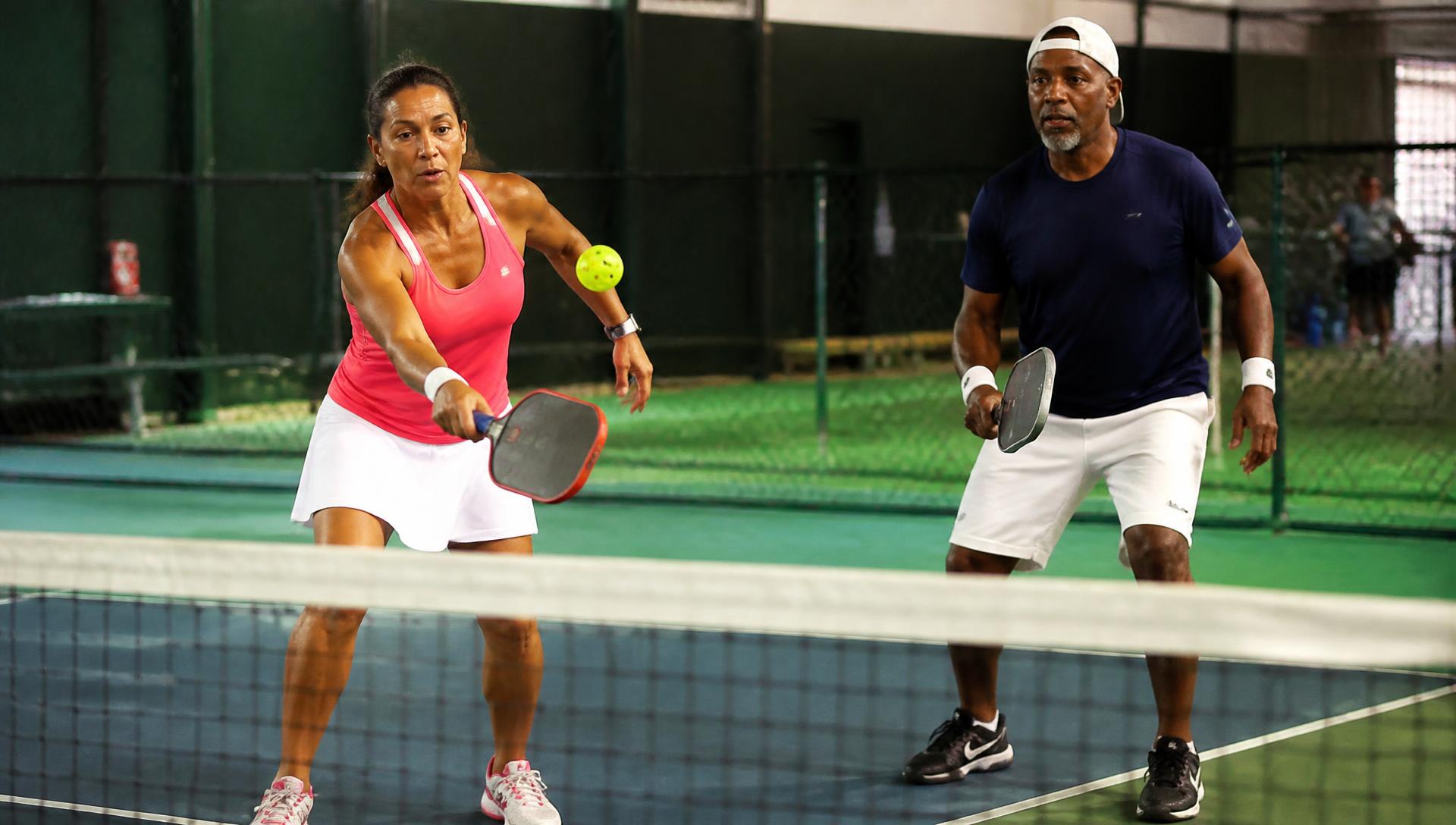
Two players mid-rally on an indoor pickleball court
← Back to The Kitchen Pickleball Club

01Play

How to playpickleball.

New to the game or finding your rhythm? Here's everything you need to know before you step onto the court.

Chapter 01

What is pickleball?

Pickleball is a paddle sport that borrows from tennis, badminton and table tennis. Two or four players use solid paddles to hit a perforated plastic ball over a low net, on a court smaller than a tennis court. Rallies are close, quick and social — which is exactly why the game travels so well.

It is easy to learn in an afternoon and difficult to stop playing. Most people can hold a rally within their first session, and the small court means conversation never really stops.

Ten minutes to learn. A season to get good. A lifetime to stop arguing about the score.

Chapter 02

The court

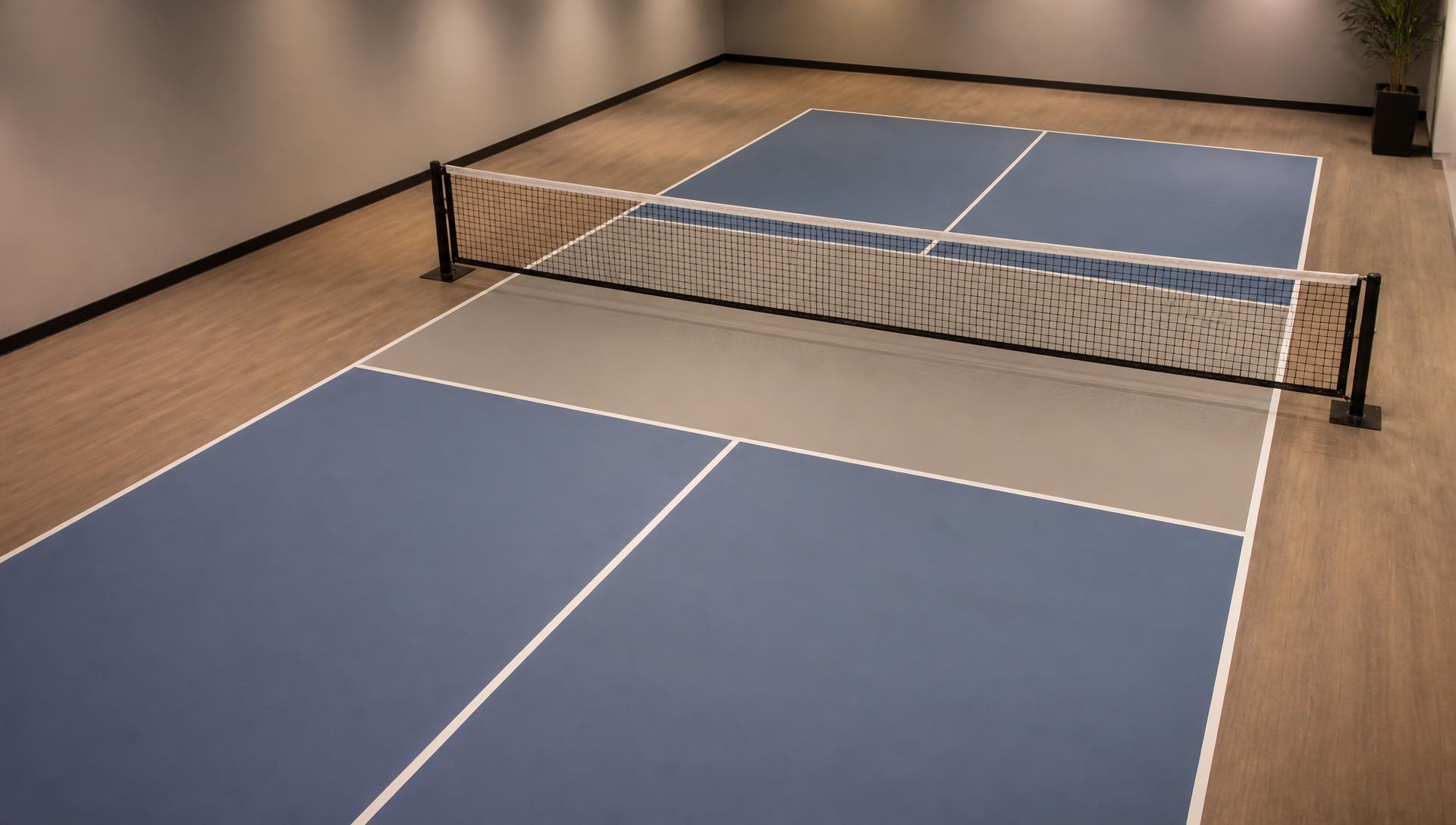
A pickleball court is 20 feet wide and 44 feet long — the same footprint as a doubles badminton court. A net crosses the middle at 34 inches high at the centre. Each half is split into two service courts by a centre line.

Closest to the net on each side is a 7-foot area running the full width: the non-volley zone, known everywhere as the kitchen. Behind it sits the rest of the court, where serves are made and most long rallies begin.

Indoor pickleball court showing the net, service courts and non-volley zone
PlayThe court

Chapter 03

The equipment

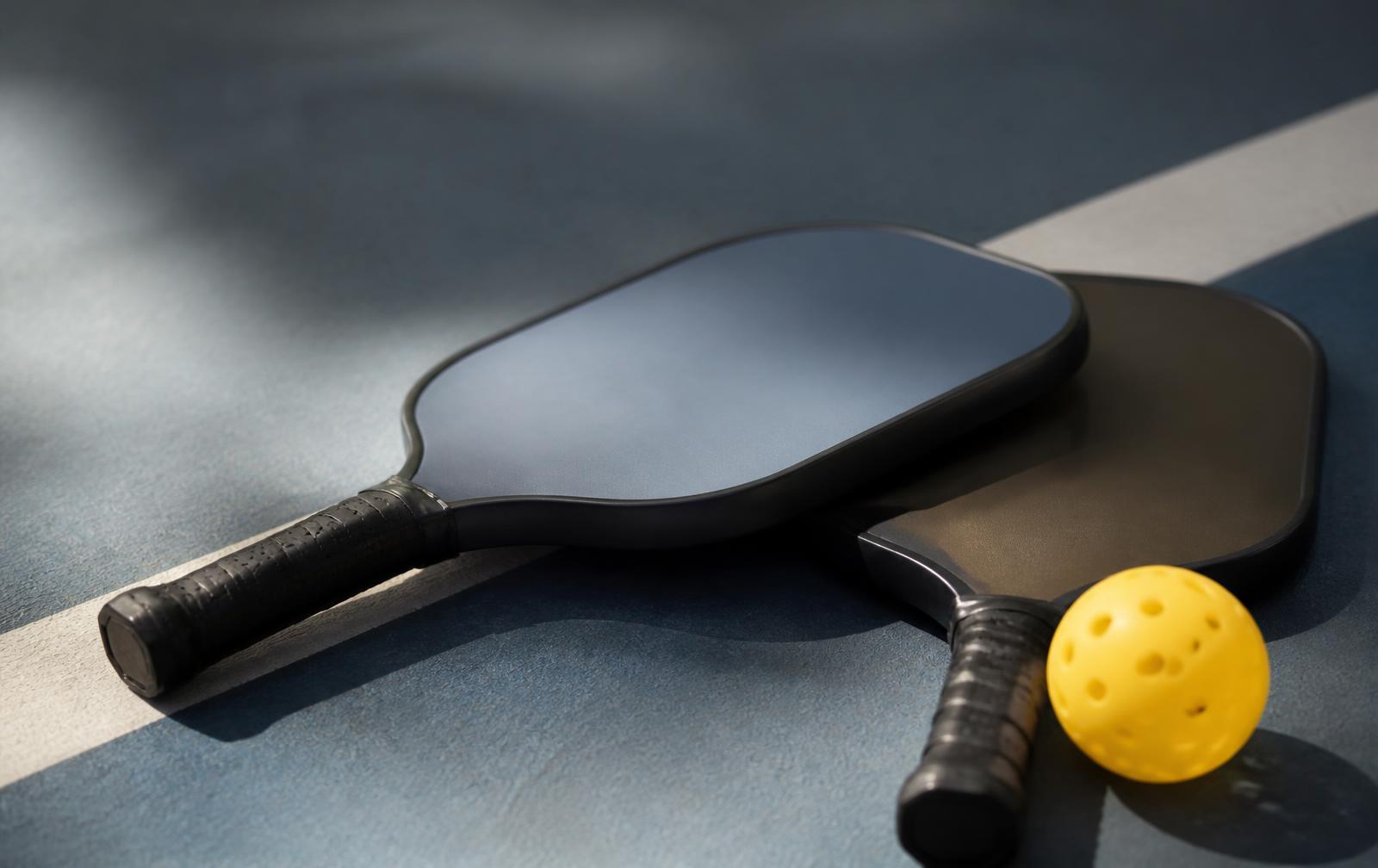
PADDLE — solid, roughly the size of an oversized table-tennis bat, usually composite or carbon faced. Heavier paddles give power, lighter ones give control.

BALL — a rigid plastic ball with holes. Indoor balls have larger holes and a softer flight; outdoor balls are harder and heavier to handle wind.

NET — 36 inches at the posts, 34 inches at the centre.

COURT SHOES — flat, non-marking court soles. Running shoes are the single most common beginner mistake, because the game is lateral, not forward.

Two pickleball paddles and a ball on a court surface
PlayThe equipment

Chapter 04

How to start

Borrow or bring a paddle, wear court shoes, bring water. Find a fourth if you can — doubles is the default format almost everywhere. Decide who serves first, start from behind the baseline on the right-hand side, and play to 11.

For the first few games, forget power. Keep the ball in play, get to the net, and let the rally teach you the geometry of the court.

Chapter 05

How to serve

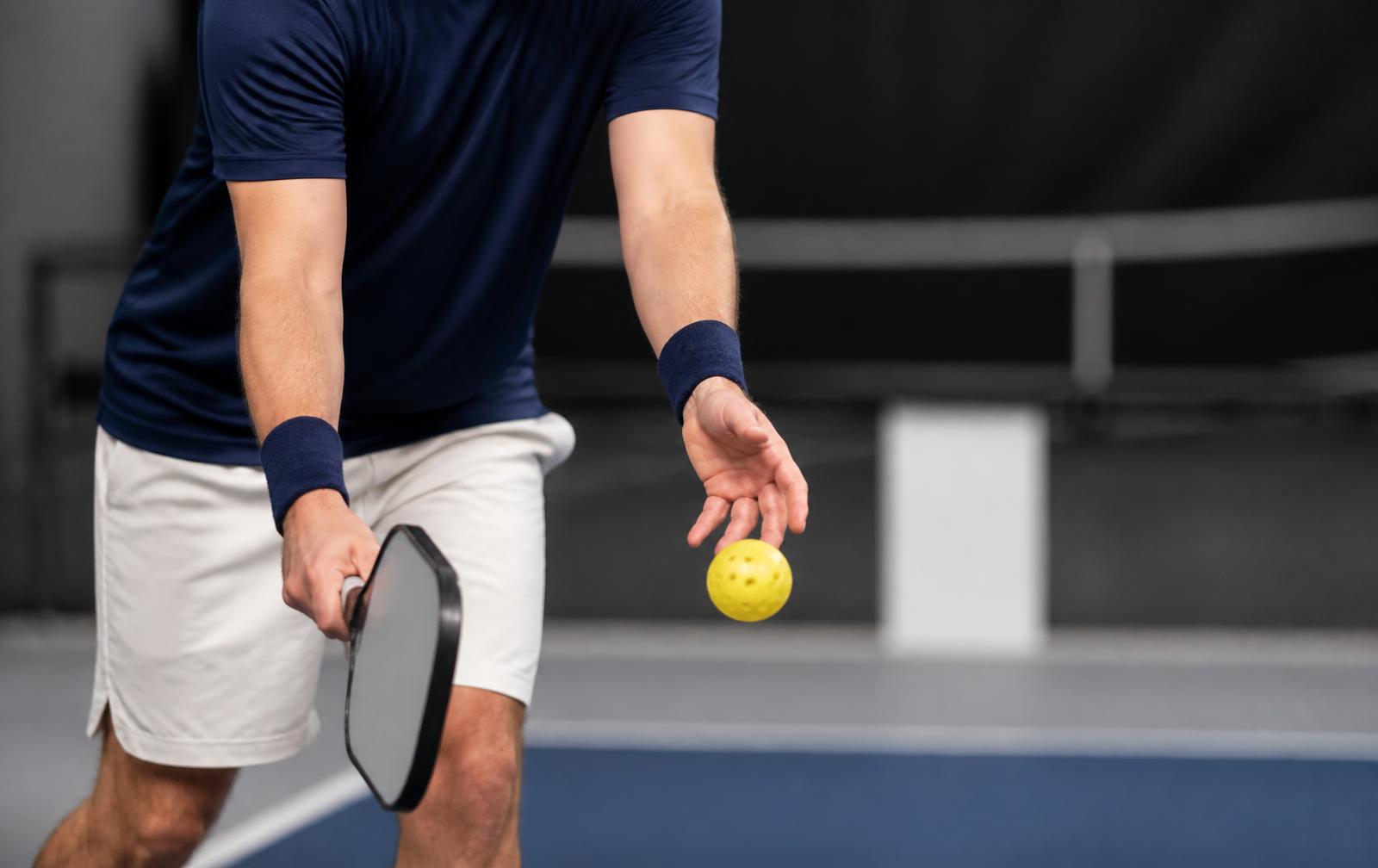
The serve is underhand. Contact must be below your waist, the paddle head below your wrist, and the ball is struck diagonally into the opposite service court, clearing the kitchen. Both feet stay behind the baseline until the ball is hit.

You get one serve attempt — there is no second serve. The serve is a way of starting the point safely, not a weapon; deep and consistent beats spectacular and out.

Player releasing the ball for an underhand pickleball serve
PlayHow to serve

Chapter 06

How to score

Only the serving side can score. Games are usually played to 11 points and must be won by two. Tournament matches are often best of three.

In doubles the score is called as three numbers: your score, their score, and whether you are the first or second server — for example "4–2, second server". Both players on a side serve before the ball passes over, except on the very first service turn of the game, when only one player serves.

Chapter 07

The basic rules

DOUBLE BOUNCE — the serve must bounce once, and the return must bounce once, before anyone may volley.

ONE BOUNCE — after that, the ball may be played in the air or after one bounce.

NO VOLLEY IN THE KITCHEN — you may not hit a ball out of the air while standing in the non-volley zone or touching its line.

FAULTS — serving out, hitting the net, letting the ball bounce twice, or volleying from the kitchen.

LINES — all lines are in, except the kitchen line on a serve, which is out.

Chapter 08

The kitchen

The seven feet closest to the net on both sides is the non-volley zone. You may stand in it, and you may play a ball that has bounced in it. What you may not do is volley — strike the ball out of the air — with a foot in the zone or on its line, including on your follow-through momentum.

That single rule is why pickleball is a thinking game. It removes the smash from the net and replaces it with the dink: soft, controlled, patient shots that drop into the opponent's kitchen and wait for a mistake.

The kitchen is where the game slows down and the match is actually decided.

Chapter 09

Open play at The Kitchen

Open play is the format the club is built around: arrive, put your paddle in the queue, rotate on and off court with whoever is next. Levels mix, partners change, and nobody is left standing on the sideline for long.

TO CONFIRM — open play days, session times, court fees and guest policy have not been supplied by the club yet. Message the club directly to confirm the current schedule before you travel.

The courtis waiting.

Book a court